
art as research
Art speaks to us of phenomenon unseen but felt. It can communicate a vast deep peace, become a source of energy and act as light of inspiration to illuminate the mind, body and soul.
Creativity as a practice that challenges and expands perception and understanding.

ART as
MEDICINE

TRADITION as TECHNOLOGY
Gina Choy’s pioneering practice-led and theoretical research deepens an appreciation and understanding of traditional Chinese painting by examining it, not as a linear or stylistic history with a timeline framed by changing dynasties and social structures with a beginning, middle and end -- but rather as a contemplative science with a dynamic body of knowledge about the creative act and the power it has to affect its practitioners and audiences.
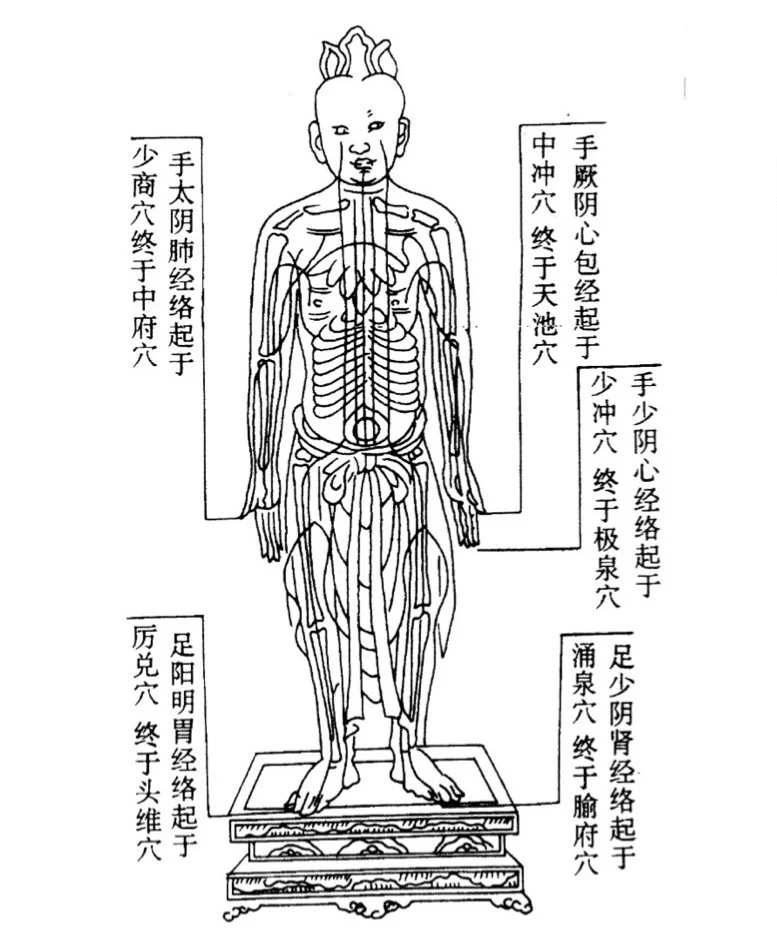
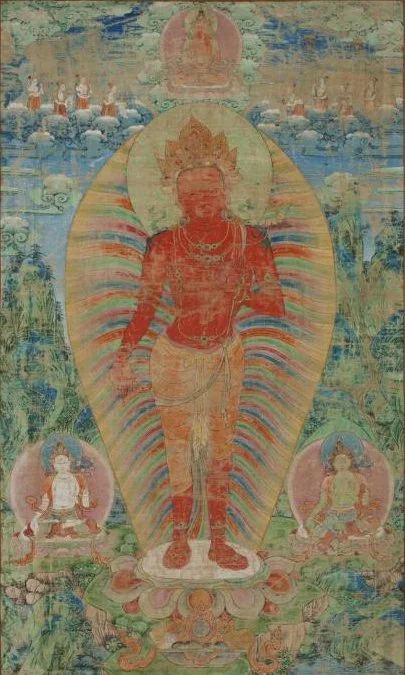
Figure 1 “Drawing of the body as appeared in the Illustrated Canon of Acu-moxa, carved on a stone stele”, from Asaf Goldschmidt, The Evolution of Chinese Medicine Song Dynasty 960-1200 (London: Routledge, 2009), 32–33.
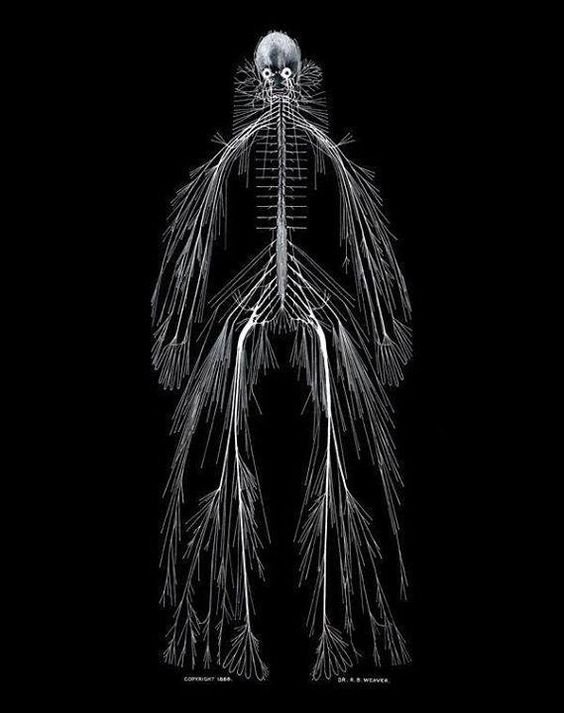
Figure 2 The Bodhisattvas Padmapani and Tara, 1700–1800, Thangka painting from China’s Hebei Province, colours on cotton (image 128.4 x 76.7 cm; overall 169.9 x 94.8 cm). Collection: Asian Art Museum, San Fransico.
Figure 3 Harriet, March 1888. Photograph by Dr Rufus B. Weaver of the first full dissection of the human nervous system. Collection: Drexel University College of Medicine, Philadelphia.
“Earlier Asian authors are closer to modern neuroscience than any writers in the European tradition”
- John Onians (2008) Neuroarthistory, 16.
Making visible the invisible energies around and within us…
The Science and Spirituality
of disciplined practice.
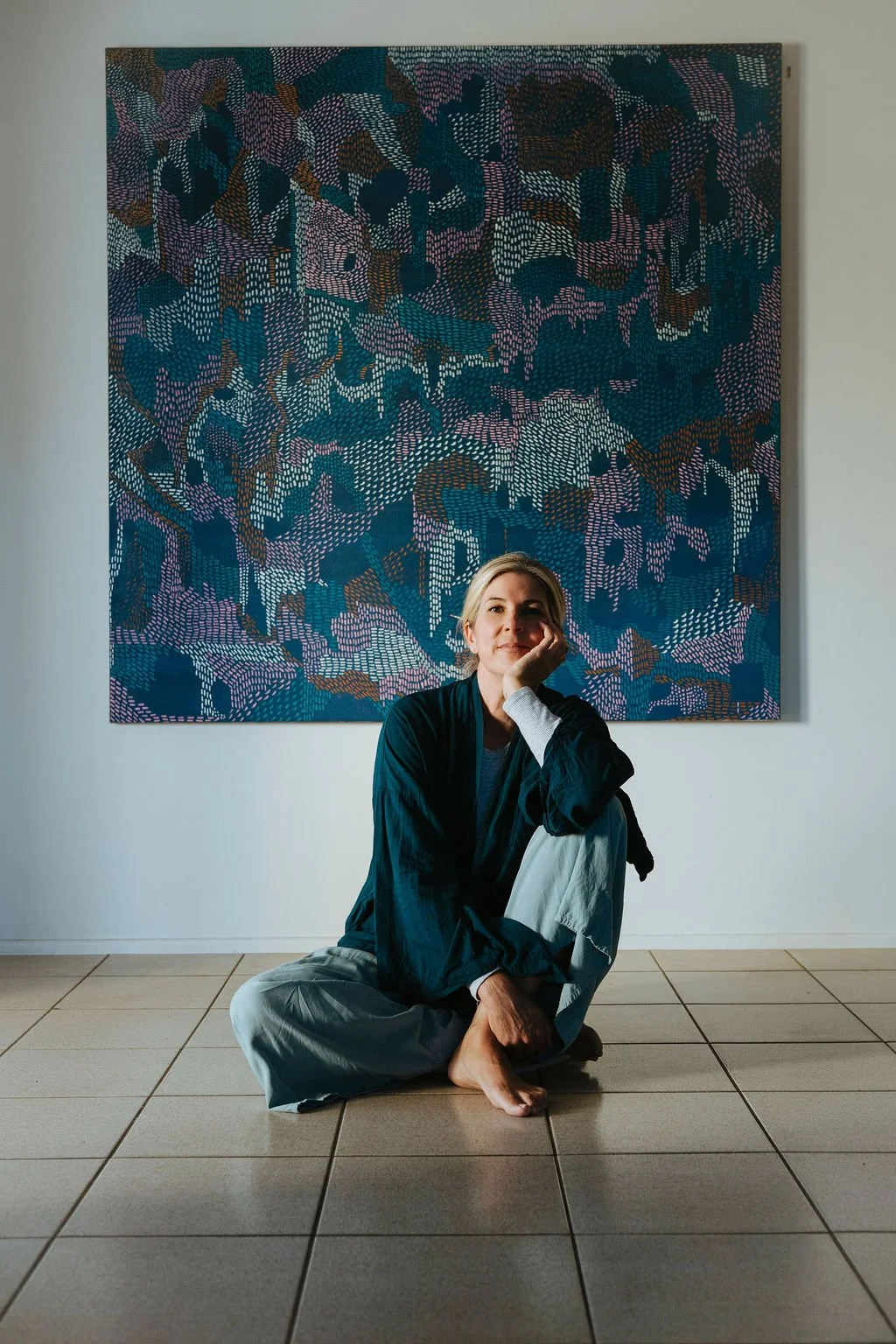
Drawing from the ancient systems and methodologies of traditional Chinese calligraphy and painting, Choy creates meticulously hand-generated works of art. She approaches systems-based practice as a research methodology—one capable of expanding perception beyond the constraints of ingrained knowledge.
By surrendering to the systems embedded within artistic practice and process, Choy embraces art as a ritual discipline, one that emphasises consistency and repetition in cultivating habits and patterns. Through this steady recurrence of action, she engages the principle of neuroplasticity—the brain’s remarkable ability to reorganise itself through experience. Each stroke, each measured movement, imprints itself not only in muscle memory but in the neural pathways of the mind, reshaping perception, precision, and embodied knowledge. Over time, this bio-mechanical dialogue between body and brain deepens, allowing the work to emerge with an unselfconscious fluency.
In her practice, the body and mind are refined as instruments, conduits through which patterns and enduring principles of the natural world are transmitted, exhaled onto the canvas.
Nature as Source, System, and Algorithm


There is a quiet cadence in the calligraphy of traditional Chinese painting—an inner rhythm that Choy perceives as algorithmic.
Nature, too, moves to its own ancient algorithms, unfolding in the branching of rivers, the spiral of shells, the drifting arc of clouds. Fractals form and reform in endless variation, each repetition familiar yet never the same. As Benoit Mandelbrot, pioneer of fractal geometry, reflected: “The same shapes repeated everywhere, yet each repetition is slightly different… its structures more varied, its harmonies richer, and its surprises more surprising.”
Traditional Chinese calligraphy, born from the study of the natural world, mirrors this self-similar beauty. Kanxi (Chinese characters) emerge from a vocabulary of essential strokes, repeated and recombined according to precise principles to form the whole. At its heart lies lí 理—nature, truth, the constant principles—regarded as the source of this primordial code. These strokes, believed capable of expressing the entirety of nature, are the foundation from which China’s traditional landscape painting springs.
In her practice, Choy turns to this visual language not only as a craft, but as a living algorithm—an enduring methodology through which the body, the brush, and the mind align. By surrendering to its order, she follows a path that can lead to insight, to illumination, and to an intimate recognition of the patterns that bind the world together.
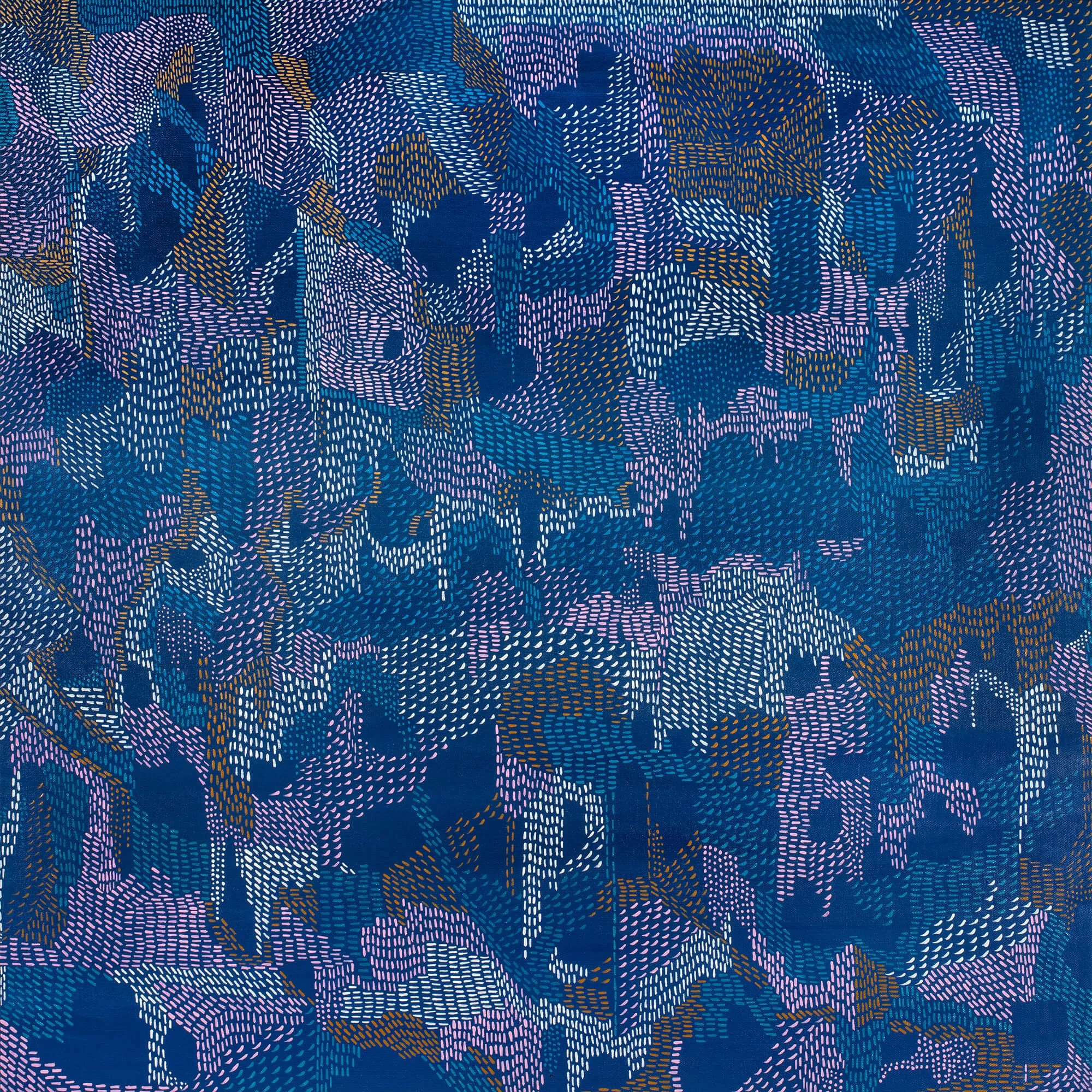
Surrendering to the systems within artistic practice and process Choy embraces art as a ritual-based discipline that emphasises consistency and repetition towards habits and patterns. Frequency, scale, iteration and the breadth of time - are all part of the material process.
View Collections

LIMINAL SPACE

LIMINAL SPACE II
INFINITY MATRIX
INFINITY
LANDSCAPES

ONENESS
PULSE-BEAT

INDIGO DAZE
TEXTILE DESIGN

XIE DONG HUA
MERKLE TREE
THE FLOATING EXCHANGE
